Best Winter Hiking Boots of 2027: 4 Snow & Ice Picks
As an Amazon Associate, PeakTrail Hub earns from qualifying purchases. Our recommendations are based on published manufacturer specifications and buyer review patterns, not hands-on testing.
Winter hiking transforms familiar mountain corridors into hostile environments where ordinary footwear fails rapidly. Freezing temperatures harden standard rubber compounds until outsoles become as slippery as plastic sleds on blue ice. At the same time, conductive heat loss through cold ground rapidly chills feet, while melted powder slush threatens to soak insulating liners from the outside. Selecting the proper cold-weather hiking boot requires matching insulation density, membrane breathability, sole compounds, and cuff heights to your regional winter conditions.
The quick answer:
- Extreme alpine cold and deep sub-zero snowpack: Salomon Toundra Pro ClimaSalomon Waterproof. Engineered with NASA-heritage Aerotherm Aerogel insulation rated down to -40°F (-40°C), delivering immense thermal insulation at a remarkably low weight of roughly 450 grams per boot.
- Rugged snowshoeing and steep backcountry climbs: Vasque Snowburban II UltraDry. Built around 400 grams of dense 3M Thinsulate Ultra insulation, a 1.8mm waterproof nubuck leather shell, integrated gaiter D-rings, and a molded snowshoe heel shelf.
- Budget-conscious trail walking and slush clearance: Columbia Bugaboot III. Features an injection-molded waterproof lower rubber shell, 200 grams of synthetic insulation rated to -25°F (-32°C), and a responsive Techlite midsole cushion.
- Fast-paced winter fitness and mixed-condition day hikes: Merrell Thermo Chill Mid Waterproof. Combines 200 grams of lightweight low-bulk M-Select WARM insulation with flexible athletic trail geometry and 5mm multi-directional winter perimeter lugs.
If you are hiking during mild spring, summer, or autumn conditions without snow cover, review our day hiking boots guide for lighter, uninsulated alternatives. For carrying heavy expedition gear exceeding forty pounds across multi-day wilderness traverses, our heavy-load backpacking boots guide offers maximum shank rigidity.
Technical Comparison of Top Winter Hiking Boots
The comparison matrix below highlights critical engineering metrics published by footwear manufacturers, including thermal insulation weights, lower shell construction materials, cold-weather outsole compounds, and average weights per pair.
| Model | Thermal Insulation | Upper Construction | Outsole Compound | Weight (Pair, Men’s 9) | Primary Cold Rating |
|---|---|---|---|---|---|
| Salomon Toundra Pro CSWP | Aerotherm Aerogel | PU-Coated Leather & Textile | Winter Contagrip Ice Compound | 900 g (31.7 oz) | Rated to -40°F (-40°C) |
| Vasque Snowburban II | 400g 3M Thinsulate Ultra | 1.8 mm Waterproof Nubuck | Nordic Rover Cold-Hold Rubber | 1,380 g (48.7 oz) | Severe Winter / Snowshoeing |
| Columbia Bugaboot III | 200g Synthetic Insulation | Waterproof Leather & Rubber Shell | Omni-Grip Winter Rubber | 1,400 g (49.4 oz) | Rated to -25°F (-32°C) |
| Merrell Thermo Chill Mid | 200g M-Select WARM | PU-Coated Leather & Ripstop | Merrell Winter Grip / 5mm Lugs | 1,020 g (36.0 oz) | Moderate Winter / Active Pace |
Understanding Winter Footwear Engineering
Before reviewing individual models, winter hikers must understand the three core mechanical pillars that differentiate dedicated winter boots from standard three-season hiking boots: thermal barriers, cold-weather rubber polymers, and snow management integration.
Thermal Insulation: 200g vs. 400g vs. Aerogel
Conductive heat loss through the bottom of a boot accounts for the majority of cold feet complaints on snow-covered trails. Footwear manufacturers measure synthetic insulation in grams per square meter:
- 200 Grams (Active Pace / Moderate Cold): Found in athletic winter boots like the Merrell Thermo Chill and Columbia Bugaboot III. Designed for aerobic winter activities such as fast hiking, steep hill climbing, or snowshoeing where the body naturally generates substantial heat. Ideal for temperatures ranging between 15°F and 35°F (-9°C to 2°C).
- 400 Grams (Severe Cold / Static Exposure): Found in heavy-duty boots like the Vasque Snowburban II. Provides sufficient thermal density to prevent frostbite during slow ascents, extended rest stops, or sub-zero expeditions ranging between -10°F and 15°F (-23°C to -9°C).
- Aerotherm Aerogel (Maximum Warmth-to-Weight): Used in the Salomon Toundra Pro. Aerogel is a synthetic porous ultralight material originally engineered for aerospace spacesuits. It traps still air within microscopic nanostructures, offering up to four times the thermal resistance of traditional polyester insulation without adding bulky loft.
Cold-Weather Rubber Chemistry
Standard summer hiking rubbers, including standard Vibram Megagrip formulations, are optimized for warm rock adhesion and high tensile durability. When ambient temperatures drop below freezing, standard rubber compounds undergo glass transition, turning hard, rigid, and slick.
Dedicated winter outsoles like Salomon Winter Contagrip and Vasque Cold-Hold incorporate specialized soft polymer blends and hydrophilic microscopic grip particles. These specialized rubber compounds remain pliable at sub-zero temperatures, conforming to micro-textures on icy rock surfaces rather than skating across them.
Powder Management and Gaiter Integration
Deep powder snow poses a constant threat of cuff spillover. Once powder melts inside a boot, moisture destroys the insulating air pockets of socks and liners, causing rapid foot freezing regardless of how much insulation the boot contains. High-cut collars (eight to ten inches) provide primary protection, while integrated metal D-rings on the lower throat allow hikers to hook front gaiter clips securely without putting strain on eyelets.
Detailed Model Breakdown
Salomon Toundra Pro ClimaSalomon Waterproof
The Salomon Toundra Pro ClimaSalomon Waterproof is engineered specifically for extreme sub-zero mountaineering trails, frozen northern crossings, and deep-freeze alpine conditions where ordinary winter footwear proves too heavy or insufficiently insulated. Salomon achieved this by wrapping the entire foot and forefoot cap in Space Foundation-certified Aerotherm Aerogel, creating an impenetrable thermal envelope rated down to -40°F (-40°C).
- Upper Materials: High-durability polyurethane-coated leather combined with tight-weave abrasion-resistant synthetic textile.
- Thermal Barrier: Aerotherm Aerogel panels positioned strategically over the toe box, underfoot bed, and instep.
- Waterproofing: ClimaSalomon Waterproof (CSWP) flexible bootie membrane that blocks external moisture while maintaining interior climate control.
- Outsole Formulation: Winter Contagrip rubber engineered to stay flexible and tacky in extreme sub-zero cold.
Pros:
- Exceptional warmth-to-weight ratio, weighing roughly 450 grams per boot while offering extreme -40°F thermal resistance.
- Aerogel insulation retains full thermal performance under foot pressure without crushing or compressing down like conventional fiber loft.
- High-cut padded cuff with gusseted tongue provides excellent barrier defense against powder drift.
Cons:
- High-cut collar requires several short trail outings to break in around the lower shin and ankle.
- Generates excessive internal warmth during high-intensity aerobic hikes in mild winter weather above 25°F (-4°C).
Buyer review summaries indicate that winter climbers and northern trail hikers praise the Toundra Pro for keeping feet warm during full-day exposures on frozen ridgelines. Many user reports note that the boot feels surprisingly nimble on technical ascents compared to bulky traditional pac boots.
Vasque Snowburban II UltraDry
The Vasque Snowburban II UltraDry is a purpose-built winter workhorse designed for technical snowshoeing, deep backcountry wilderness trekking, and punishing mountain ascents. Unlike flexible day hiking boots, the Snowburban II is built with a stiff supportive chassis and a thick 1.8mm waterproof nubuck leather exterior that resists abrasion from crusty snow layers and binding straps.
- Upper Materials: 1.8mm premium waterproof nubuck leather reinforced with heavy-duty rubber toe rands and a molded heel counter.
- Thermal Insulation: 400 grams of dense 3M Thinsulate Ultra insulation distributed evenly throughout the entire liner.
- Waterproofing: Proprietary UltraDry waterproof membrane system combined with seam-sealed internal construction.
- Sole System: Vasque Nordic Rover outsole featuring Cold-Hold dual-density rubber lugs designed to bite into packed snow.
Pros:
- Thick 400g 3M Thinsulate insulation maintains warmth during long stationary stops and sub-zero summit rests.
- Integrated forward D-ring and molded heel ledge allow quick, secure attachment of snowshoe bindings and trail gaiters.
- Sturdy 1.8mm leather shell shields feet from hidden submerged obstacles and heavy crust impact.
Cons:
- Substantial weight at approximately 690 grams per boot (1,380 grams per pair).
- Rigid sole platform offers less natural forefoot roll on flat hard-packed trailheads.
Buyer feedback across outdoor retail channels highlights the Snowburban II for dependable durability across multiple rugged winter seasons. Reviewers frequently emphasize that the molded heel ledge eliminates snowshoe strap slippage on steep sidehill traverses.
Columbia Bugaboot III
The Columbia Bugaboot series has been a staple of cold-weather footwear for decades. The Bugaboot III focuses on dependable waterproof protection, accessible price points, and functional warmth for hikers who navigate snowy trail systems, rolling forest parks, and icy winter access roads.
- Upper Construction: Waterproof seam-sealed leather upper bonded to an injection-molded rubber lower duck-boot shell.
- Thermal Barrier: 200 grams of synthetic insulation engineered for active performance down to -25°F (-32°C).
- Cushioning: Techlite lightweight midsole formulation providing sustained impact absorption and energetic rebound.
- Outsole Rubber: Omni-Grip non-marking multi-directional traction rubber designed for packed snow and wet slush.
Pros:
- Molded lower rubber shell creates a complete waterproof barrier against freezing puddles and deep wet slush.
- Techlite midsole provides immediate step-in cushioning that requires virtually no break-in period.
- Solid thermal warmth for general winter trail hiking at an accessible gear budget.
Cons:
- Lower rubber perimeter reduces breathability during high-exertion uphill hikes, leading to internal sweat accumulation.
- Omni-Grip tread pattern has broader lug spacing that offers less micro-edge grip on pure hard blue ice than specialized winter Vibram.
Customer reviews frequently applaud the Bugaboot III for keeping socks bone-dry during mixed slush and freezing rain trail hikes. Hikers note that pairing the boot with a moisture-wicking merino wool liner sock helps regulate foot temperature during extended outdoor sessions.
Merrell Thermo Chill Mid Waterproof
The Merrell Thermo Chill Mid Waterproof brings the beloved fit and immediate comfort of Merrell’s flagship hiking shoes into a winterized chassis. Designed for active hikers who prefer an agile, lightweight mid-cut boot over towering high-cut pac boots, the Thermo Chill provides targeted insulation without restricting ankle mobility on rolling trail networks.
- Upper Materials: Waterproof polyurethane-coated leather combined with durable ripstop mesh panels.
- Thermal Insulation: 200 grams of low-bulk M-Select WARM lightweight insulation.
- Waterproofing: M-Select DRY impermeable barrier that seals out exterior moisture while venting vapor during strenuous climbs.
- Outsole Formulation: Merrell winter-tuned rubber outsole featuring 5mm directional perimeter lugs for biting into snowy turf.
Pros:
- Exceptionally nimble athletic feel, weighing just 510 grams per boot with natural forefoot flex.
- 200g low-bulk insulation provides balanced warmth that prevents overheating during high-cadence winter hill repeats.
- Kinetic Fit BASE contoured footbed provides stable arch support and heel cup centering straight out of the box.
Cons:
- Mid-cut height allows snow infiltration in powder deeper than six inches without external trail gaiters.
- Lacks the extreme sub-zero thermal capacity required for slow-moving expeditions below 0°F (-18°C).
Hikers consistently rate the Thermo Chill Mid highly for zero break-in discomfort and immediate trail-readiness. Reviewers note that it excels on packed winter trails where speed and athletic maneuverability are higher priorities than deep-powder flotation.
Winter Trail Safety: Microspikes, Gaiters & Merino Socks
A premium winter hiking boot is only one part of an effective winter traction system. When venturing into backcountry terrain during freezing months, consider these essential footwear companions:
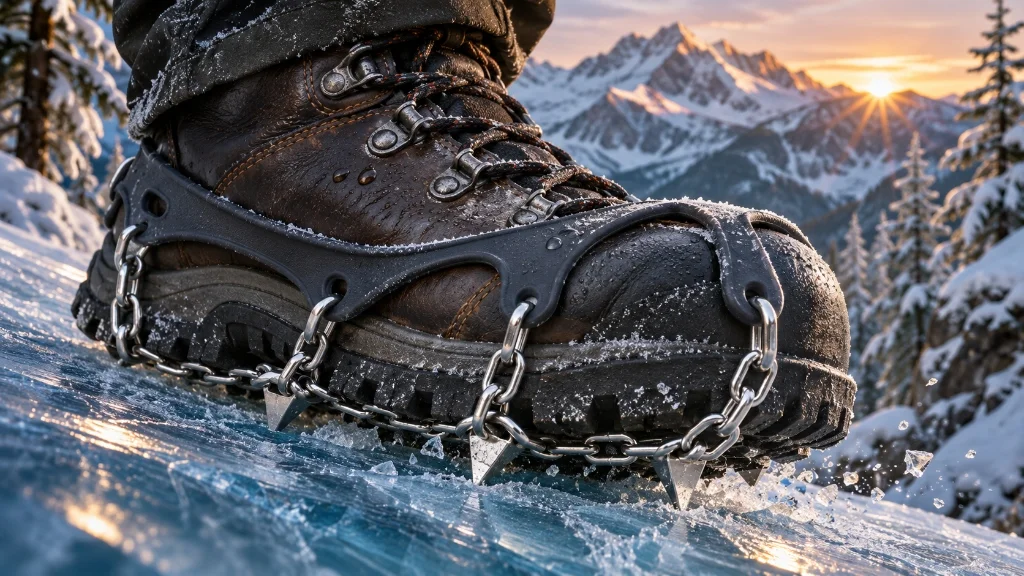
- Trail Microspikes: While specialized cold-weather rubber outsoles provide traction on packed snow and textured ice, sheer blue waterfall ice and polished summit scrambles require steel spikes. Look for elastomeric harness microspikes with heat-treated stainless steel teeth that slip securely over winter boot soles.
- Tall Breathable Snow Gaiters: To prevent snow from packing down around your ankles and soaking your socks, pair high-cut boots with waterproof breathable knee-high gaiters. Secure the bottom strap under your boot arch and hook the front clip to your boot’s D-ring.
- Merino Wool Heavy Cushion Socks: Never wear cotton socks on winter hikes. Cotton absorbs moisture, collapses flat, and conducts body heat away from skin twenty-five times faster than dry wool. High-density merino wool retains insulation even when damp and provides critical underfoot cushioning.
Who Should Buy What
To match the ideal winter hiking boot to your specific winter climate and trail demands, follow these recommendations:
- Choose the Salomon Toundra Pro CSWP if: You frequently hike in extreme sub-zero environments below 0°F (-18°C), tackle high-altitude winter passes, or need maximum warmth without carrying heavy clunky pac boots. Its Aerotherm Aerogel technology provides unmatched thermal efficiency per ounce.
- Choose the Vasque Snowburban II UltraDry if: You regularly strap into snowshoes, hike through crusty backcountry powder, and require maximum ankle stiffness and 400g thermal protection for long mountain days.
- Choose the Columbia Bugaboot III if: You need an affordable, dependable winter trail boot that handles wet melting slush, freezing mud, and snowy weekend trail loops with zero break-in period.
- Choose the Merrell Thermo Chill Mid if: You prioritize agile athletic speed, natural forefoot flexibility, and lightweight comfort on packed snowy trails in moderate winter climates above 15°F (-9°C).
For warmer seasonal hiking advice, explore our comprehensive day hiking boots guide or our heavy-load backpacking boots guide to configure your full-year outdoor footwear rotation.